When the area turns from typical to crisis, the initial 2 minutes seldom look like television. There is noise, a rise of adrenaline, and a spreading of half-remembered suggestions. I have stood in cooking areas, car parks, and workplace passages where the distinction between a close phone call and a catastrophe was not heroic luster, however tranquility, basic first aid succeeded. Prior to the rescue turns the corner, you are the bridge. The fundamentals listed below come from years of first aid training, scene deal with neighborhood responders, and countless debriefs where we asked what worked, what really did not, and why.
The framework: your priorities in any type of emergency
Think of a tight sequence that you can run even when your hands shake. First, ensure safety for you and bystanders. Second, learn what took place and how many people are entailed. Third, check responsiveness and breathing. Fourth, call or pass on a contact us to emergency situation solutions and bring an AED if readily available. Fifth, provide just the treatment you are trained and able to offer. This sequence is not stiff. It flexes with context, yet it maintains you out of the weeds.
This article leans on what a solid first aid course instills: behaviors, not manuscripts. Memorized lines vaporize under stress. Routines continue to be. Good programs or a concentrated CPR course will certainly have you practice with situations that look messy, due to the fact that real life seldom bows to lists. If you hold a first aid certificate already, treat this as a sensible refresher course, the kind that links class discovering to points you can do on a footpath or factory floor ideal now.
Scene security is not optional
You can not assist if you end up being a 2nd casualty. In my very early years teaching first aid and CPR, I viewed keen volunteers hurry towards risk. One slid on fuel at a collision scene and disjointed a shoulder. The client still required assistance, and now we had a second problem.
Pause and look. Are there relocating automobiles, fire, electric threats, broken glass, a group pushing in? Cut the noise psychologically and select a secure technique. If you can, relocate the individual out of straight threat, however only when it is truly safe to do so. Turning off vehicle ignitions, asking somebody to regulate web traffic, or cutting a power source often creates the safety and security margin you require. The judgment right here is simple yet nuanced. A fainted jogger near a busy road can be relocated 2 meters onto yard, keeping their back aligned as ideal you can. An autumn from a roof with thought spine injury, yet with online power lines close by, needs that you maintain distance and await experts while maintaining voice contact.
The initially conversation: respond, after that breathe
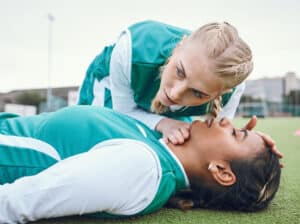
Tap the person's shoulder, speak at a regular volume, "Can you hear me?" If they react plainly, you are taking care of a conscious person that can share information. If they moan or do not respond, turn the head somewhat, open up the air passage, and check breathing for up to 10 seconds. Look for regular breast rise, pay attention for air motion, feel for breath on your cheek if that is your habit. Periodic gasps are not regular breathing.
That 10 secs issues. People either beginning CPR late because they expect renovation, or they start prematurely while the individual is still taking a breath. A solid CPR training program drills this difference. If you identify they are not breathing generally, begin CPR. If an AED is within yelling distance, send out somebody currently. If you are alone, call for assistance initially with your phone on audio speaker, then begin compressions.

The craft of CPR in the wild
High high quality compressions get time. They are not mild. They are not tentative. For a grown-up, go for a deepness of regarding 5 to 6 centimeters, at a price close to 100 to 120 per minute. Let the chest recoil completely in between compressions. Count in your head or utilize a tempo like the beat of "Stayin' Alive." Do not stress about best hand placement in the very first 5 secs. Interlaced hands at the center of the upper body, shoulders over your hands, and your arm joints secured will certainly obtain you 95 percent of the way there.
Breaths work if you are trained in first aid and CPR, specifically for drownings, overdoses, and pediatric apprehensions. If you are alone and hesitant, hands-only CPR is far better than delays. The AED will not change compressions, but it will certainly guide you through rhythm analysis as soon as attached. Pads go on bare skin. If the chest is extremely hirsute, you may require to shave a little spot making use of the razor in the AED kit or apply a pad, rip it off to eliminate hair, after that apply a fresh pad. Metal pendants or drug spots need to be relocated apart. If the person is damp, dry the upper body quickly preferably. Maintain everybody clear throughout shock distribution. Return to compressions immediately after the shock. I have actually seen people pause to see if the device "functioned." Do not stop beyond what the tool advises. Blood circulation is your job until the heart recovers it.
A brief story from a pool center sticks with me. An adolescent lifeguard began compressions within 30 seconds on a collapsed swimmer, while a colleague fetched the AED. The pads took place, the initial shock delivered at regarding the 3 minute mark, and first aid training Darwin region compressions resumed promptly. The person walked out of hospital two days later on. Timing and self-confidence from their CPR courses made that possible.
When breathing is present but weak
Not every emergency is a full arrest. Occasionally you discover an individual breathing, yet slow-moving, superficial, or blocked. If they are subconscious and breathing generally, position them in the healing setting. This secures their airway and decreases the threat of aspiration if they throw up. Maintain their head a little slanted to preserve an open respiratory tract, and monitor breathing continually. If breathing adjustments, prepare to roll them onto their back and start CPR.
With suspected spine injury, focus on respiratory tract while minimizing movement. Use a jaw thrust if trained. If you can not maintain a clear airway without rolling the person, roll them as a system with any kind of bystanders aiding. This is where practice in a first aid and CPR course settles, due to the fact that hesitant half-motions can aggravate the scenario. Deliberate, worked with actions keep control.
Bleeding control: easy abilities that save lives
Severe exterior blood loss can finish a life in minutes. Direct stress quits most bleeding when applied strongly and constantly. If you have clean and sterile gauze, use it. Otherwise, a clean towel or apparel jobs. Press it into the wound and do not peek. Preserve stress up until help takes over or the bleeding stops. If blood soaks with, include more cloth on top and keep pressing. Altitude assists partially, but pressure and stress alone does the hefty lifting.
Arterial bleeding from a limb, brilliant red and pulsing, may require a tourniquet. If you are learnt tourniquet usage, use a business device 5 to 7 centimeters over the wound, not over a joint. Tighten up up until hemorrhaging stops and keep in mind the time. Home made tourniquets function poorly unless you can improvisate a durable windlass. In city setups where first responders arrive rapidly, direct pressure is generally enough, but in remote job sites tourniquet training is well worth contributing to your first aid courses.
Internal blood loss is trickier. Discoloration, swelling, pallor, and a quick, thready pulse might be all you see. Lay the individual flat, keep them calm and cozy, and do not provide food or drink. Quick transportation is the remedy, not movement or guesswork.
Choking: the secs matter and the actions are specific
Choking offers with a worried appearance, hands at the throat, or an inability to speak. If the person can cough vigorously, motivate coughing and remain close. If they can not cough or talk, back up them and supply company back impacts in between the shoulder blades. If that falls short, make use of stomach thrusts. For expecting or obese adults where abdominal thrusts are tough, button to breast thrusts. Cycle in between these till the blockage gets rid of or they faint. If they collapse, call for help and start CPR. Each time you open the airway to offer breaths, seek the item and, if visible, remove it. Do not do blind sweeps.
Infants call for a different technique taught in any kind of experienced first aid training. 5 back slaps with the baby face down, supporting the head, complied with by five breast thrusts. Reassess and repeat. Your hands are tools. Use them deliberately. In the years I have actually educated, I have yet to satisfy a caretaker who was sorry for practicing these maneuvers on manikins before requiring them in actual life.
Medical reasons that impersonate as trauma
Not every collapse is heart associated. Diabetics with reduced blood sugar level might show up intoxicated, slur words, or come to be combative prior to they sag to the ground. If they are awake enough to swallow, provide rapid sugar, gel or pleasant beverage, and stick with them. If unconscious, do not provide anything by mouth. Call for assistance. For understood serious allergic reactions, anaphylaxis can escalate from hives and wheezing to air passage swelling promptly. If the person has an epinephrine auto-injector, aid them utilize it right into the outer upper leg. The impact is usually remarkable however can wear away. Screen and prepare to duplicate as instructed on the device if signs and symptoms return.
Stroke is another typical emergency situation where timing is everything. Utilize a fast screen: facial droop, arm weak point, speech trouble. Note the time signs started or were last seen normal. Keep the person calm, prevent providing anything to eat or consume alcohol, and get aid instantly. The earlier professionals can verify stroke type and start therapy, the better the outcome.
Seizures typically draw crowds and can frighten onlookers. Clear the area to avoid injury. Do not restrain the person and do not put anything in their mouth. When the seizure finishes, they might remain overwhelmed. Put them in recovery placement and assure them. Call for aid if the seizure lasts more than 5 minutes, repeats without full recovery, if it is a very first seizure, if injury happened, or if the person is pregnant.
Asthma flare can develop over hours or explode in mins. Help the individual rest upright, motivate them to utilize their reliever inhaler with a spacer if offered, and monitor carefully. If they can not speak full sentences, their lips transform blue, or inhaler use does not relieve signs, treat it as harmful and require help.
The art of delegation: make the crowd useful
A solitary capable responder can do a whole lot. 3 scattered helpers can do more. Appoint clear, short jobs by pointing to individuals. "You in the blue tee shirt, phone call triple no and tell me when you are linked. You in the cap, bring me the AED from function. You with the knapsack, wait the entryway and guide the rescue inside." Unclear requests evaporate in the fog of a scene. Details commands secure people.
When I educate, I motivate groups to rehearse this. It seems staged, however in a genuine emergency situation the person that appears crucial comes to be the gravity well. People pay attention. You do not need a title to do this. You require clarity.
Documentation, memory, and the handover
Paramedics will request for the essentials: what happened, timeline, individual's grievances, drugs, allergies, pertinent case history, what you did, and how the person responded. If a person can compose, have them note times. Time of collapse, time CPR began, time AED pads attached, shocks provided, time epinephrine provided, sugar given, anything that can form decisions downstream. A brief, precise handover stops duplication and rates treatment.
If you are at a workplace, part of your first aid pro procedure likely consists of completing an occurrence report. It is more than paperwork. Patterns from these records educate future training, equipment placement, and plans. For example, one storehouse I dealt with understood that their AED was 8 mins from the far packing dock when staff had to detour with a card-controlled passage. They moved an added AED to the dock, and in a later occasion, it made a material difference.
Equipment that earns its keep
A well-stocked kit is a comfort, but also a thin set can be leveraged with know-how. Gauze, triangular plasters, gloves, sticky tape, a pocket mask, and a thermal blanket are the workhorses. If your setup supports it, include a tourniquet, sugar gel, and a spare auto-injector if policy allows. In community centers and gyms, AEDs are typical currently. In tiny offices, they are still sometimes dealt with as a high-end. The math argues otherwise. Cardiac arrest survival greater than increases when a public AED is made use of before EMS arrives. That is not marketing from a CPR course leaflet. It is sustained by windows registry data across cities and countries.
Check your package quarterly. Change ended items. Make it simple to discover. In one of my audits, we found six sets spread throughout a multi-level workplace, none classified, two secured cupboards. The flooring wardens found out about 3 of them. After straightforward modifications - wall-mounted boxes with clear labeling, an uploaded map, and an annual first aid correspondence course - the confidence and reaction speed improved markedly.
The limitations of ordinary treatment and when to stop
There is a line between efficient first aid and wishful thinking. Quit relocating a person when it creates discomfort or resistance, unless staying in place threatens. Do not attempt to lower fractures. Do not provide pain relievers to a subconscious person. Do not get rid of deeply ingrained objects; stabilize them. Do not detect. If you start CPR, proceed up until you are physically not able, expert assistance takes control of, the client reveals signs of life, or the scene becomes hazardous. This quality protects you and the patient.
Emotional limits matter too. After a tough occasion, even trained -responders can drink, lose sleep, or replay information. Debrief with coworkers. Use your organization's assistance sources. One of the strongest predictors of readiness for the next occasion is just how you process the last one.
Building skill prior to you need it
Reading offers you a framework, but self-confidence lives in your hands and voice. A formal first aid course puts you under trained stress till your hands move without overthinking. If you deal with children, try to find first aid and CPR courses that cover pediatric variations comprehensive. If your job calls for a credential, ensure the provider issues an acknowledged first aid certificate and can deliver updates like a CPR correspondence course yearly. Abilities erosion is real. Two years after a course, unrefreshed skills discolor, and people keep in mind headings greater than technique.
Choose training that spends much less time on slides and even more time on circumstances. Inquire about course size and manikin proportion. You desire technique time, not a lecture on loophole. Great teachers inform stories responsibly, appropriate strongly but kindly, and adjust to your setting. A cafe supervisor needs a different viewpoint than a remote area worker. If you have an AED on website, ask for hands-on experiment a trainer unit of the same version. If your team encounters hemorrhaging dangers, consist of practical tourniquet work. If your setting consists of susceptible adults or youngsters, practice safe training and very discreet care.
Putting it together: an easy, solid mental model
Everything above can be distilled into a rhythm that you can run under anxiety. It is not an inflexible list. It is a living series that approves detours and real-world mess.
- Scan for danger, put on handwear covers if readily available, and make the area risk-free enough to approach. Check reaction and breathing, and shout for aid. Call emergency services early and bring the AED. If not breathing normally, begin CPR set, affix the AED, follow motivates, and lessen interruptions. Control extreme bleeding with direct stress, and use a tourniquet if trained and needed. Manage typical clinical dilemmas with targeted activities: recuperation position for the unconscious but breathing, sugar for the conscious hypoglycemic, epinephrine for anaphylaxis, clear room and secure for seizures, support inhaler use for bronchial asthma, and use the FAST examination for stroke.
Tape this in your head. It is the spinal column of good reaction. In method, it will certainly not feel straight. You might begin compressions, then someone shows up with the AED, after that you listen to the sirens while you are still pressing. That is fine. The factor is to maintain energy on the few activities that matter most.
Small details that alter outcomes
The right details substance. Loosen up limited apparel around the neck. Get rid of dentures only if they are loose and blocking the respiratory tract. Maintain the individual cozy to lower shock. Comfort with brief, confident sentences, even if they can not respond. "You are not alone. Assistance is on the way. I am with you." Discomfort and fear spike heart rate and oxygen demand. Your tranquil voice decreases both.
If the individual has a clinical ID arm band, reviewed it. Diabetics, individuals with epilepsy, severe allergies, and heart conditions often wear them. If friend or family get here, fold them right into valuable roles or position them where they can see however not crowd. Their presence can resolve the patient greater than any blanket.
On the lawful front, a lot of areas protect good-faith first aiders under Good Samaritan legislations when they act within their training. Know your neighborhood regulations, yet do not let fear of litigation stop you from giving standard help. Courts look kindly on sensible care. They look improperly on desertion or reckless acts.
Practicing for your unique environment
Context issues. A ranch has different dangers than a gym. A construction website's first aid needs differ from a senior high school's. Stroll your setting. Where are the AEDs? Who has tricks after hours? Which lift fits a stretcher? Where does a helicopter land if required? These sound like side instances up until you encounter them. During a drill at a factory, we learned that the local gate broad enough for an ambulance was locked with a lock no person might locate at night. The solution was basic - a keypad lock with a common code and a brilliantly painted article with the code published for very first -responders. That small adjustment shaved minutes in a later genuine response.
If your team revolves or has high turnover, construct five-minute micro-drills into month-to-month meetings. A single person plays a flattened coworker. 2 others run the feedback. First Aid Course Albion The remainder watch, after that give organized comments: what went well, what to improve, what to alter in the setting. It maintains first aid and CPR abilities awake without committing half a day.

Why fast action issues, and why it requires humility
Numbers tell the story without dramatization. In unexpected heart attack, each min without CPR and defibrillation decreases survival by about 7 to 10 percent. In serious arterial bleeding, loss of a liter of blood can take place in two to three mins. In stroke, every hour unattended kills numerous neurons. Yet rate without judgment can damage. Well-intended but misuse of an autumn sufferer with a suspected back injury can aggravate end results. Putting water right into the mouth of a fainted person can trigger aspiration. Great initial aiders pair seriousness with restraint. They do sufficient and not too much.
I think about a storehouse manager that stood close to an employee in anaphylaxis, speaking smoothly, auto-injector all set, timer operating, rescue en route. She withstood the urge to provide a second dose prematurely, viewed the breathing price, and trained the employee with panic. Her group later informed me they had simply finished a first aid and CPR course the month prior. Practice provided pose and speed. That is the peaceful power of preparation.
After the alarms: closing the loop
Once experts take control of, your work changes. Deal a crisp handover, step back, and let them function. Secure the scene for any kind of examination required, particularly in work environments. Replace utilized supplies. Book a debrief. If your actions exposed spaces, fix them while the memory is cozy: reorder handwear covers that fit, place better signs for the AED, readjust the duty roster so experienced staff exist throughout peak hours.
If this occasion drank you, talk about it. Anxiety after a real resuscitation or a fatality on scene is not weak point. It is a human action to hard things. Lots of companies provide personal support. Utilize it. A CPR Certificate Brisbane straightforward debrief makes you more powerful for the next time, and there will be a following time.
A final nudge towards readiness
You do not need to be an expert medic to make a professional distinction. Learn CPR, update your abilities with a CPR refresher course yearly, and choose first aid training that really feels genuine, not memorizing. If you work in a setup with details dangers, customize the learning. If you are a supervisor, sponsor a first aid and CPR course for your group and make it regular to practice. If you are a private, enroll in a weekend break course and devote to practice once a quarter. Maintain your first aid certificate existing. These are tiny investments contrasted to the advantage when mins stretch and someone you care about needs you to step forward.
Before assistance gets here, you are aid. Bring order. Bring care. Bring the basics you can manage: safety and security, breathing, bleeding, calm, and a consistent hand that keeps working until the cavalry action in. That, greater than any expensive equipment or slogan, is what a true first aid pro does.